 Dog Sledding Fairbanks
Is Dog Sledding in Fairbanks Worth It?
Last reviewed September 2026
Is dog sledding worth it in Fairbanks: yes, if you want a genuine working-dog experience and can accept that the ride itself is often shorter than the listed duration; no, if you're expecting a long scenic tour or can't handle real Alaskan cold for the time you're outside. Prices run $115 to $499, and the entry point is a 30-minute private run at North Pole for $115 that gets you a full cold-weather kit, private sled and a team that's rated 5.0 from more than 1,600 reviews. What decides whether it's worth it for you isn't the price so much as what you actually get in the minutes you're on the runners, and whether the animal-welfare question, which comes up constantly in the People Also Ask box for this exact search, holds up when you look at it directly.
Quick answer Yes, if you know what you're buying; no, if you expect a long scenic ride
Dog sledding in Fairbanks is worth it if you want time with a working sled team and can accept that some listed durations include transfer and photo time rather than pure sledding; it's not worth it if you want a long ride for a low price or can't tolerate standing outside in real Alaskan cold. Prices run $115 to $499, and the best entry point is a $115 private 30-minute run where the listed time and the sled time are identical.
Key takeaways
- Prices run $115 to $499; the $115 North Pole run is the honest entry point
- The single best reason to go: time with a working sled team bred for exactly this, not a novelty ride
- The single biggest honest downside: some 90-minute tours are only 20 to 30 minutes of actual sledding
- Skip it if standing outside in sustained sub-zero cold for an hour genuinely isn't for you
- Best timing: the snow season runs November through April; see the season guide for the month-by-month case
- The ethics question has a real, checkable answer. Covered in full below, not just asserted
The Short Answer
A conditional verdict, not a flat yes or no, because the answer genuinely depends on what you're booking it for.
Worth it, with conditions
Dog sledding in Fairbanks is worth it for most visitors who book with realistic expectations about duration and cold, and it stops being worth it the moment either of those gets glossed over. The catalogue here spans $115 to $499, and the cheaper end isn't a lesser version, it's a shorter and more honest one: the North Pole run's 30 listed minutes are 30 minutes on the sled, no transfer folded in.
- Worth it if you want genuine time with a working sled team, not a theme-park ride
- Worth it if you're prepared to dress for real sub-zero cold, not a mild winter
- Worth it if a private, quieter tour matters more to you than a long group excursion
Skip it if
- Skip it if you're expecting a long ride and can't accept that some listings spend more time in transit than on the sled
- Skip it if a set budget ceiling under $115 rules out even the cheapest tour here
- Skip it if standing outside for 30 to 90 minutes at temperatures well below freezing is a genuine health or comfort concern for you
Dog Sledding in Fairbanks: The Balance Sheet
What we genuinely like
- Genuine time with a working sled team bred specifically for distance running
- A private-tour option exists at every price point up through $200
- Cold-weather gear is included on several listings, not just the priciest ones
- Free cancellation up to 24 hours before the start on most tours
The honest downsides
- Listed duration on some tours includes transfer and photo time, not just sledding
- Real sub-zero cold is part of the experience, not an edge case
- No listing runs below $115, so it isn't a low-cost add-on to a Fairbanks trip
- One tour is sold non-refundable with no changes
Who it's NOT for: Anyone expecting a long ride for a short-tour price; Travelers with a heart condition, back problems or serious cold sensitivity, without checking with the operator first
What It Actually Costs
Prices run $115 to $499 and the entry point is a 30-minute private run; the full cost breakdown, including extras, lives on the dedicated cost guide, so this table covers only the headline tiers.
What each tier buys
Total spend for most bookings lands closer to $175-230 once a cash tip for the musher is added; gratuities are excluded from every listing. The North Pole run is the cheapest and shortest way in; the Yukon Quest Trail run is the best-value option for anyone who wants real mileage.
| Option | Typical price | Duration | Best for |
|---|---|---|---|
| North Pole private run | from $115 | 30 min, all sledding | First-timers who want the shortest honest ride |
| Yukon Quest Trail run | from $200 | 1 hr 30, 7 miles sledding | Anyone who wants real distance and a full kit |
| Borealis Basecamp day trip | from $274.80 | 8 hr, 1 hr sledding | A full day out with a reindeer visit included |
| Drive-your-own team | from $499 | 3-6 hr, most of it sledding | Visitors who want to harness and drive, not just ride |
What You Get for the Money
The shape of a Fairbanks sled tour is fairly consistent across listings, even though the length and extras vary.
The sequence, arrival to departure
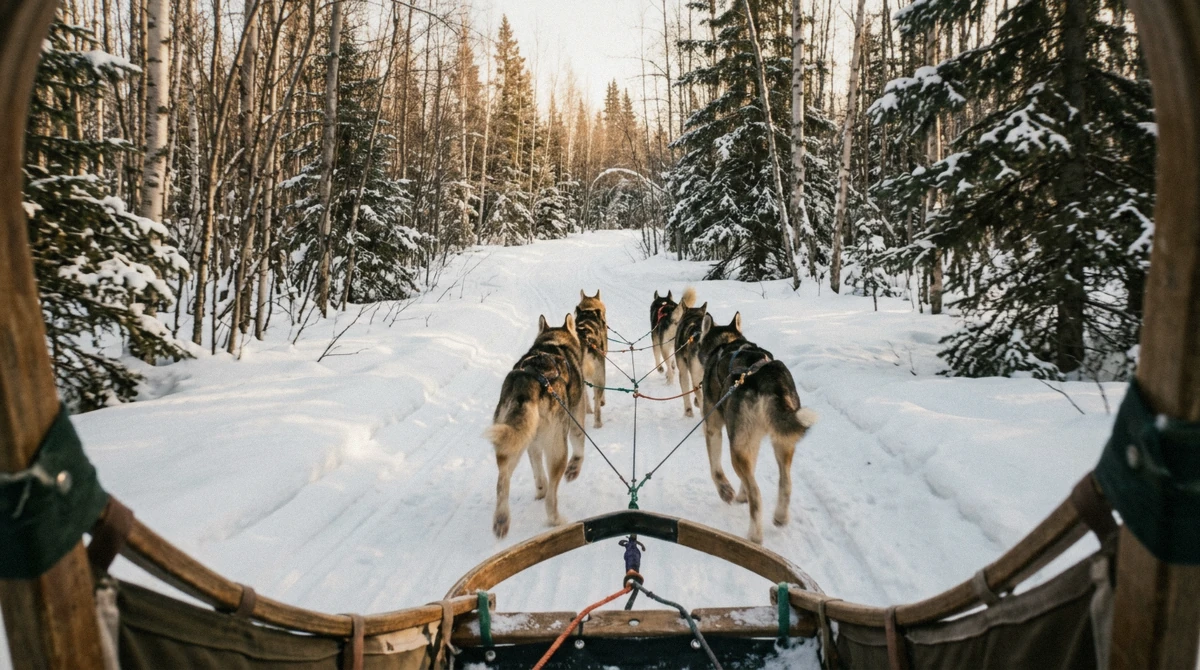
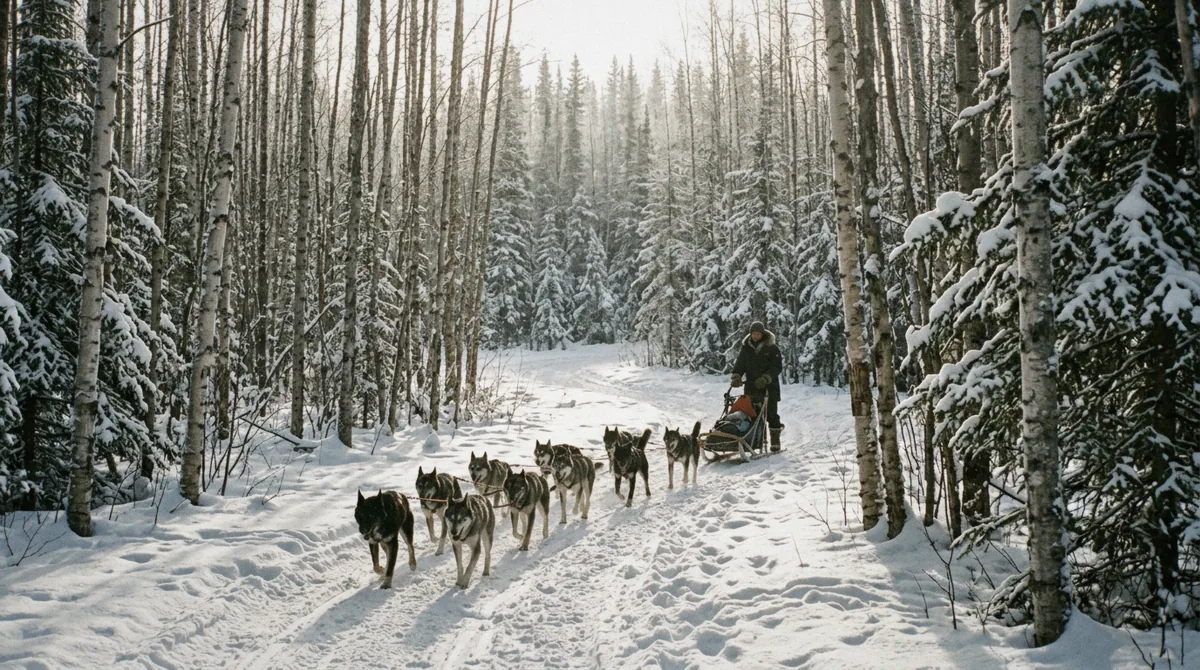
Most tours start with a gear check and a walk to the dog yard, where the musher introduces the team by name, explains who runs lead and who runs wheel, and harnesses eight or so dogs while the rest bark to be picked. The sled itself moves through birch and spruce forest on trails cut specifically for training and touring, at a pace closer to a brisk jog than anything dramatic, with a stop partway on shorter tours for photographs and hands-on time with the team.
What's included varies by listing: full cold-weather gear on some tours, private transport and a meal on others. What reviewers consistently write about is the time with the team at the stop, not the ride itself, which tracks with how these tours are actually built around a working kennel rather than a scenic drive.
What you'll likely notice
The dogs are visibly working animals, leaner and more compact than the Siberian husky most visitors picture, and many Fairbanks tour dogs trace back to Iditarod and Yukon Quest racing lines. Expect enthusiasm bordering on chaos in the dog yard before the run and near-silence once the sled is moving, since the only sound is runners on snow.
Are Dog Sled Rides Humane?
This is the question the search itself is mostly asking, so it gets a full answer rather than a reassurance and a link.
What an Alaskan husky is bred for
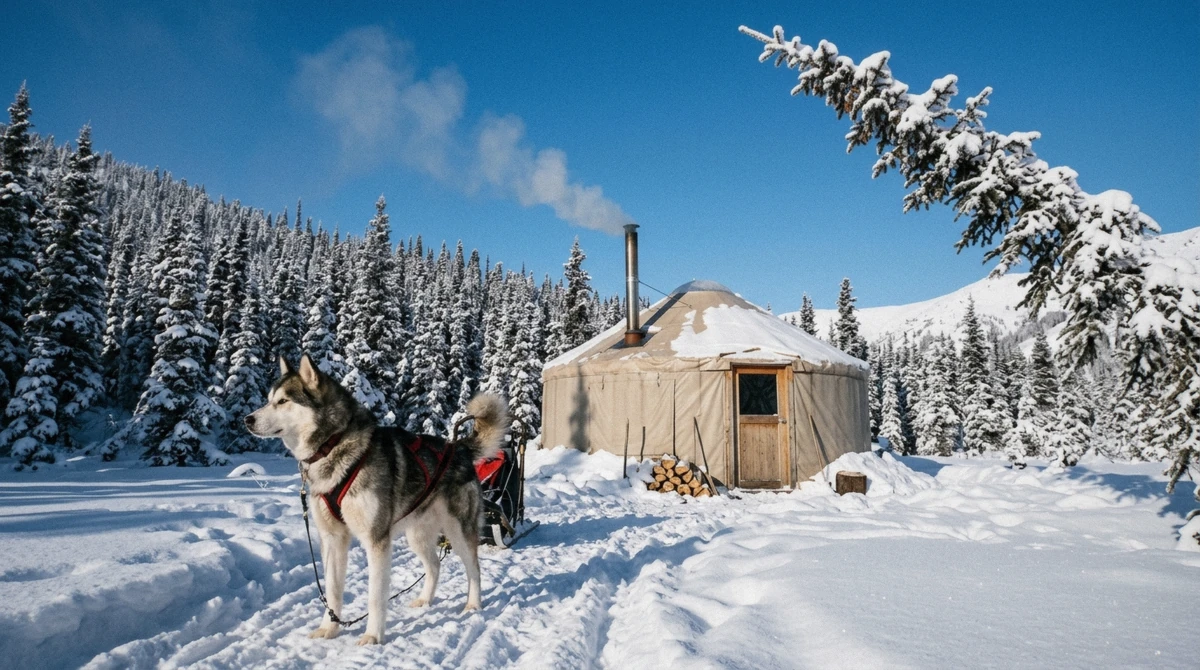
The Alaskan husky isn't a registered breed so much as a working type, bred over generations for distance running rather than looks, and it's leaner and often smaller than the Siberian husky most visitors picture when they hear "sled dog." Many of the dogs pulling tour sleds around Fairbanks come from Iditarod and Yukon Quest racing lines, animals selected across decades specifically for the drive to run in a team. That lineage matters to the welfare question: these are dogs bred to want to pull, not dogs forced into an unnatural task.
A working kennel versus a photo-op operation
The difference between a legitimate working kennel and an operation set up purely for tourist photos shows up in details a visitor can actually check on the day: whether retired dogs are still on the property rather than quietly gone, whether the musher can name each dog and speak to its lineage rather than reciting a script, and whether the dogs look conditioned and alert rather than thin or listless. Bill Cotter, a Nenana musher with fifty years of racing, holds four humanitarian awards for the care of his dogs, which is the kind of recognition that exists specifically because the sport has a formal mechanism for rewarding good animal care, not just racing results.
What you can observe for yourself
A few concrete things separate a well-run tour from a questionable one, and none of them require insider knowledge: do the dogs come to the fence and show excitement rather than avoidance when people approach, are older or retired dogs visibly still part of the kennel rather than absent, can the musher answer a specific question about a dog's parents or racing history without hesitation, and does the team get real rest between tours rather than running back-to-back groups all day. A kennel that welcomes those questions is a good sign in itself.
The honest bottom line
Long-distance mushing carries its own humanitarian awards and veterinary oversight precisely because animal welfare is taken seriously within the sport, not despite scrutiny from outside it. That doesn't make every operator equally good, and it's worth judging the specific kennel behind whichever tour you book rather than the activity in the abstract. The signs above are visible in a single visit, which is more than can be said for most tourist wildlife encounters.
The Honest Downsides
Five real friction points, ordered roughly by how often they show up in traveler feedback.
The cold
The cold is the main reason people come away disappointed, more than any issue with the dogs or the operator. Standing at a photo stop in sustained sub-zero temperatures is a different experience than the moving parts of the ride itself. Dress for it properly and this stops being a downside; the what-to-wear guide covers exactly what to bring.
Listed duration includes the transfer
Listed duration includes the transfer, so some 90-minute tours are 20 to 30 minutes of sledding, with the rest spent in a van and on photographs. This isn't hidden, it's just easy to miss when comparing tours by their headline number rather than reading the fine print.
Weather can shorten or change the run
Low-snow conditions on at least one tour swap sleds for UTVs, which the operator states plainly but which is still a real disappointment if a classic sled run was the whole point of booking.
The early wake-up or the long day
Day-trip and moonlight tours run 6 to 8 hours with a fixed pickup time, which eats a significant chunk of a short Fairbanks visit for a single activity.
One listing is non-refundable
One tour is sold non-refundable with no changes, which is a real cost risk if plans shift or weather turns; it's worth reading a listing's cancellation terms before paying, not after.
When It Is Worth It Most
Timing changes the experience more than most first-time bookers expect.
The season and the hour
The operators' own stated snow season runs November 1 through April 20, and within that window the coldest, darkest months (December and January) also carry the best odds of a genuinely wintry-looking run and, incidentally, the best aurora-viewing overlap for anyone pairing the two. Morning tours tend to run in calmer conditions before afternoon wind picks up. Most listings here cancel free up to 24 hours before the start, which is the practical hedge against a bad-weather day rather than betting on a specific date.
For the full month-by-month case on when to go, see dog sledding season in Fairbanks.
Who Should Do It, and Who Should Skip It
If You're a first-timer who wants the shortest honest introduction
Book it: the North Pole run matches its 30-minute listing exactly
If You have children with you
Do it, with an age check first: the North Pole run sets a minimum age of 5, and infants ride on laps on a couple of other listings
If You have real cold sensitivity or a heart or back condition
Skip it, or ask the operator directly before booking. Most listings flag these as risk factors
If You're on a strict same-day budget under $115
Skip it: no listing in this catalogue is priced below the North Pole run
If You want to actually drive the team, not just ride
Book the drive-your-own team adventure at $499 instead of a passenger tour
How to Book Without Overpaying
A few practical moves keep the price honest and the day flexible.
Booking window and cancellation
Most listings here cancel free up to 24 hours before the start, which is worth using: book early to hold a slot in the popular December-to-February window, then reassess closer to the date if the forecast turns. The one exception, the afternoon transfer run, is sold non-refundable, so confirm that specific listing's terms before paying if your plans have any uncertainty.
Three tours matched to three goals
Matching the tour to the goal, rather than to the price alone, is what keeps a booking from disappointing. These three cover the main reasons people search this question in the first place.
| Goal | Book this | Price | Why |
|---|---|---|---|
| Shortest, cheapest honest introduction | North Pole private run | $115 | 30 listed minutes, all of it sledding |
| Real mileage without a full-day commitment | Yukon Quest Trail run | $200 | 7 miles, full gear kit, private transport |
| A full day with more than sledding | Borealis Basecamp day trip | $274.80 | Reindeer visit and lunch voucher included |
For the full price breakdown across every listing here, including gear rental and tipping norms, compare which Fairbanks sled tour to book before deciding.
Whichever way the answer falls, the Fairbanks sled tours compared here are sorted on the one number that decides the day rather than on price alone.
Worth-It Questions About Fairbanks Dog Sledding
How much time do you actually spend on the sled compared to the listed duration?
It varies by tour. The North Pole run's 30 listed minutes are entirely sledding; the hotel-pickup tour lists 90 minutes but only 20 to 30 of them are on the sled, the rest is transfer and photo time. Check the specific listing rather than assuming the headline number is all sledding.
Is dog sledding overrated?
Not for what it actually is: time with a working sled team on trails cut for exactly this. It's overrated only if you're expecting a long, dramatic scenic ride from a short or budget listing, which is a mismatch of expectations rather than a flaw in the activity itself.
Do the dogs actually want to run?
Alaskan huskies are bred specifically for distance pulling, and the dog-yard scene before a run, teams barking to be chosen, is consistent with dogs eager to work rather than reluctant. A well-run kennel also rests teams between tours rather than running them back-to-back all day; that rest pattern is something you can ask about directly.
What's the single biggest reason people are disappointed?
The cold, more than anything about the dogs or the ride itself. Standing outside at a photo stop in sustained sub-zero temperatures is uncomfortable if you're underdressed; proper gear, covered in the what-to-wear guide, removes most of that disappointment.
Is a private tour worth the extra cost over a group tour?
Often yes for the experience, not always for the price. A private tour like the North Pole or Yukon Quest Trail run means the musher's commentary is a conversation rather than a broadcast to a group, which reviewers consistently note leads to more time learning dogs' names and lineage.
Do dogs enjoy dog sledding?
Every visitor account of a hook-up says the same thing, and it is the most useful evidence available: the noise before a run is deafening and it stops the instant the sled moves. Alaskan huskies are bred over generations for the drive to pull, and a team that did not want to run would be useless to a musher whose season depends on it. What is fair to say is that enjoyment is not the same as consent, and the honest test is the one you can apply on the day: whether the dogs come forward to greet you, whether the older dogs are still on the property, and how long the team rests between tours.
Is dog sledding considered abuse?
Not as a category, and the sport polices itself more than most visitors expect. Long-distance mushing has its own humanitarian awards for dog care, which exist precisely because the question is taken seriously inside it: Bill Cotter, a Nenana musher, holds four across fifty years of racing. That is not a blanket clearance for every operation. A working racing kennel that breeds, keeps and retires its own dogs is a different thing from a business assembled for tourist photographs, and the difference shows in details you can check yourself at the yard before you get on the sled.
Can you tell if a kennel treats its dogs well before booking?
Yes, to an extent, from the listing and reviews: look for whether retired dogs are mentioned as still on-site, whether reviewers describe a specific musher answering detailed questions about the dogs, and whether the operator states its own cold-weather cutoffs and rest practices rather than staying vague.
Who should skip dog sledding in Fairbanks entirely?
Anyone with a firm budget under $115, anyone for whom standing outside in real sub-zero cold for 30 minutes to an hour is a genuine health risk, and anyone expecting a long scenic ride from what is, on most listings, a shorter and more intimate experience than that.
The honest verdict holds up: dog sledding in Fairbanks is worth it for the specific thing it actually offers, not for a version of it that doesn't exist in this catalogue. For the real cost breakdown, see what dog sledding in Fairbanks costs, and for when to go, the season guide covers the rest.
If the answer here is yes, the next question is which one, and the Fairbanks sled tour catalogue lays the listings out on the number that decides it.