 Dog Sledding Fairbanks
What to Wear Dog Sledding in Fairbanks
Last reviewed September 2026
What to wear dog sledding in Fairbanks depends more on which tour you booked than on the calendar: some listings hand you a full arctic kit at the door, and at least one issues nothing at all. Rod's Alaskan Guide Service in North Pole provides jacket, bibs, boots, gloves and a neck gaiter; the Yukon Quest Trail run outfits you in a Mongolian yurt with parka, bibs, boots, mitts, hats and face protection, though not goggles; and the hotel-pickup run with photos issues no gear whatsoever, which is the whole point of checking before you pack. This post lays out what to buy, what to rent in town, and what every tour here actually hands you, so the only decision left is whether it's worth carrying a parka across the country or picking one up on Second Avenue for the week.
Quick answer What's handed to you, what to pack, and the one rule that applies on every tour
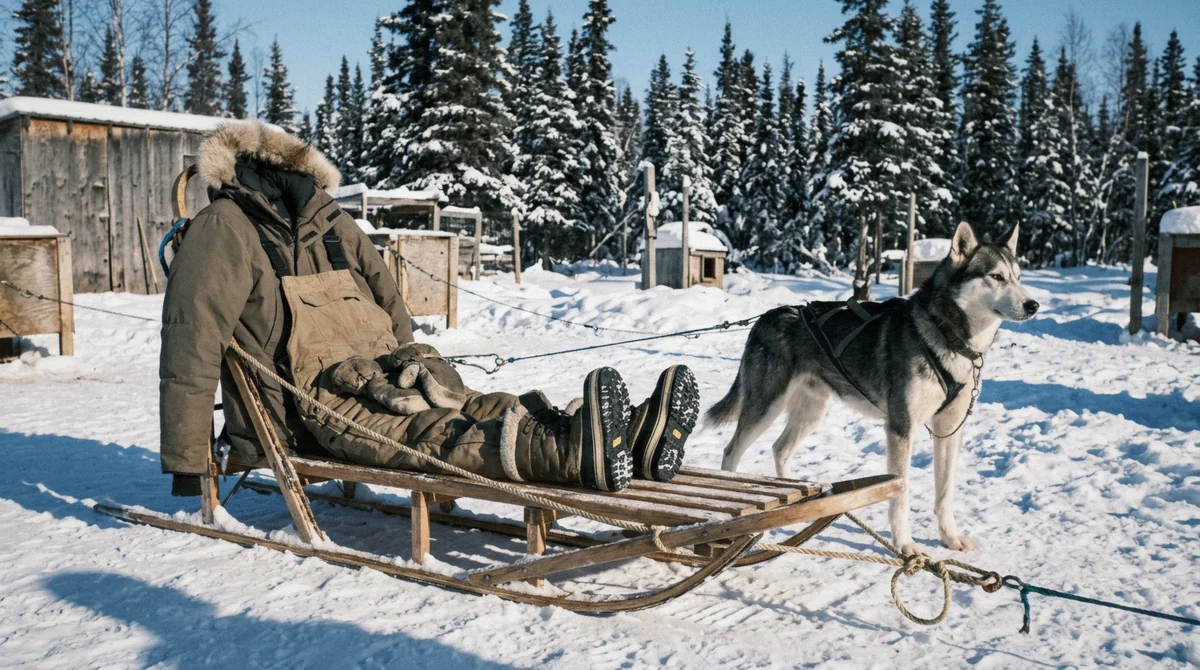
Most Fairbanks sled tours issue at least an outer layer; a few, like the hotel-pickup run, issue nothing, so your own base layers, mittens and boots have to cover the whole ride. January averages about -23°C (-10°F) in Fairbanks, cold enough that cotton and thin gloves are a real risk rather than a discomfort. Renting the gap in your closet costs $38 to $50 a day in town, which is often cheaper than buying kit you'll use once.
Key takeaways
- Check your specific tour first: gear ranges from a full kit to nothing at all, see the table below
- Cotton stays wet once you sweat under a parka; wool or synthetic base layers dry against your skin
- Mittens beat gloves for warmth because fingers share heat instead of losing it individually
- January runs about -23°C (-10°F) on average; dress for a still, dry cold that bites at the extremities first
- No gear of your own? Renting in Fairbanks runs $38 to $50 a day
- Compare the Fairbanks sled tours by what each one provides before you decide what to pack
What to Wear
The layering logic is the same for every tour here even though the issued gear is not: trap warm air close to the skin, keep wind off that layer, and treat your hands, head and feet as separate problems from your torso.
Base and mid layers
Start with a synthetic or merino wool base layer, top and bottom, against the skin. Cotton is the layer to leave at home: it holds sweat rather than moving it away, and wet cotton next to skin in a -23°C (-10°F) morning cools you faster than no layer at all. Add a mid layer, fleece or a light wool sweater, for the standing-around time at the kennel before the sled moves.
On tours that issue a parka and bibs, like the Yukon Quest Trail run, the base and mid layers are what you bring; the shell is handled for you. On tours that issue nothing, this pair of layers plus a proper outer shell is the whole system.
The outer shell
A wind-blocking, insulated parka is the single item that matters most and the one several operators hand out at check-in. If your tour is one of the ones that doesn't, either bring a genuine winter parka rated for sustained sub-zero temperatures, not a city puffer, or rent one in town for the day (see the rental section below). Insulated snow bibs or pants matter as much as the jacket: sitting or standing on a sled runner puts cold air against your legs for the full ride.
Hands, head and face
Mittens beat gloves in real arctic cold because fingers packed together share warmth, while gloves isolate each digit and lose heat faster. A thin glove liner underneath lets you handle a phone or a zipper without exposing bare skin for more than a few seconds. On top, add a warm hat that covers the ears and a neck gaiter or balaclava for the face; several tours issue one or both.
Phone batteries fail fast in the cold, often dropping by half in twenty minutes of exposure, and touchscreen gloves stop registering once your fingers are cold enough to need mittens in the first place. Keep the phone in an inner pocket against your body and pull it out only for the shot.
Footwear
Insulated, waterproof winter boots rated to at least -40°F are the standard here, not hiking boots and not the boots you wore in a milder winter city. A wool or synthetic sock, sized so the boot still has room for your toes to move, keeps feet warmer than a thick sock jammed into a snug boot. Several tours issue boots as part of the kit; where one doesn't, this is the item most worth renting rather than skimping on.
What to Bring
Beyond what's on your body, a short list of extras covers the gaps that catch first-timers, most of them things a Fairbanks operator mentions once in a confirmation email and easy to forget by departure day.
The packing list
None of these are provided by any tour in the catalogue, and each solves a specific problem that shows up on the trail rather than in the parking lot.
- Hand warmers: a backup when mittens aren't enough at a photo stop
- Lip balm with SPF: wind and dry cold crack lips within an hour outside
- A spare phone battery or power bank kept warm in an inner pocket
- Sunglasses or ski goggles: glare off snow is sharp even under cloud
- A thin buff or extra neck gaiter if your tour doesn't issue one
- Cash for tipping the musher: gratuities are excluded from every listing here
- A dry bag or ziplock for a phone that comes out for photos
- Snacks for the drive if your tour has no hotel pickup
- A change of dry socks if your boots aren't rated for the day's cold
- Any prescription glasses secured with a strap, since goggles can knock them loose
What Fairbanks Sled Tours Provide
The provided-versus-bring split is set entirely by the operator, not by the season or the length of the ride, so it's worth checking the actual listing rather than assuming. The table below is built from each tour's own gear policy in the catalogue.
Provided gear, tour by tour
Some listings issue full cold-weather kit and some issue none. The provided-vs-bring split is per operator, and it doesn't track with price. The cheapest tour here, Rod's private North Pole run, issues a complete outer kit; the $199 hotel-pickup tour issues none.
| Tour | Provided | Bring your own | Notes |
|---|---|---|---|
| North Pole private run ($115) | Jacket, bibs, boots, gloves, neck gaiter | Base layers, hand warmers | Full kit; arrive in what you'd wear to breakfast |
| Yukon Quest Trail run ($200) | Parka, bibs, boots, mitts, hats, face protection | Goggles | Gear issued in a yurt; goggles are the one gap |
| Hotel pickup + photos ($199) | Nothing stated | Full cold-weather kit, head to toe | No gear issued: dress and pack as if the tour provides nothing |
| 1-hour winter run ($175) | Not stated on the listing | Full kit to be safe | Heated yurt afterward, but gear policy isn't published |
| Howling Bay homestead ($155) | Not stated on the listing | Full kit to be safe | Puppies and hot chocolate indoors after the ride |
| Afternoon transfer run ($230) | Not stated on the listing | Full kit to be safe | Non-refundable booking, so confirm gear by phone before paying |
| Borealis Basecamp day trip ($274.80) | Snow gear included, operator states | Layers underneath | Low-snow days may swap sleds for UTVs; gear still applies |
| Drive-your-own team ($499) | Not stated on the listing | Full kit to be safe | You harness and drive; expect to be moving and sweating more than passengers on other tours |
What Not to Wear or Bring
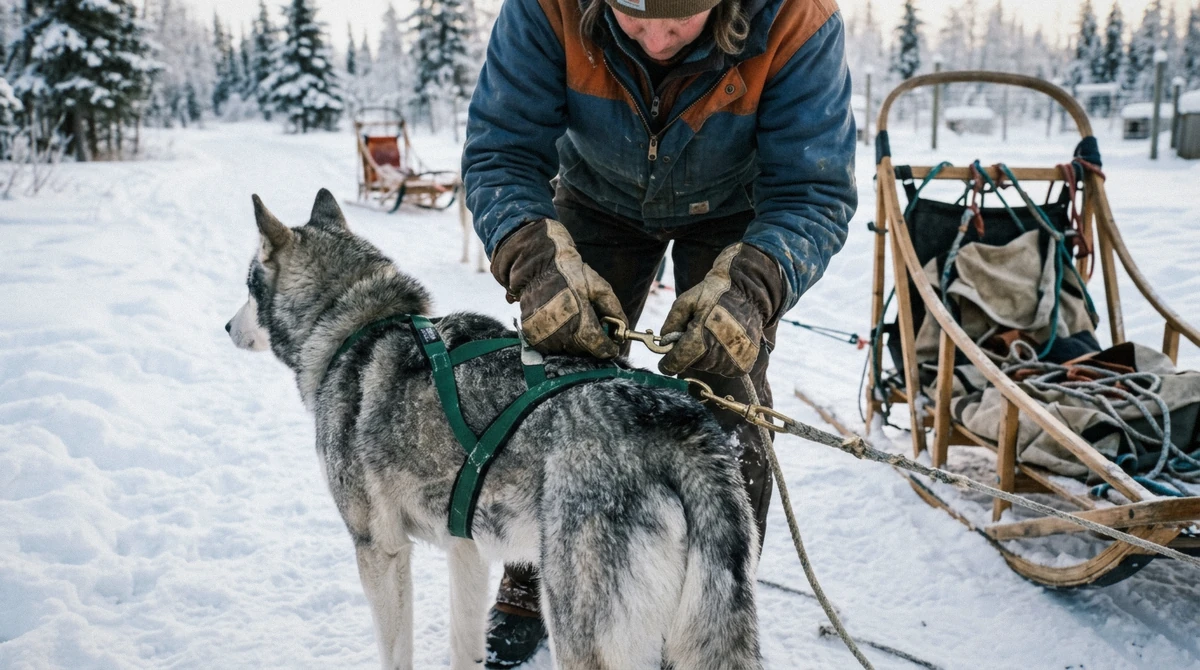
A short list of items that either fail outright in Fairbanks cold or get left behind for a practical reason on the sled.
Leave these out of the bag
- Cotton base layers or jeans: they hold moisture against the skin and cool you faster once wet
- Thin fashion gloves: they don't hold in enough heat for standing outdoors at -23°C (-10°F)
- Low-cut sneakers or fashion boots: no insulation and no traction on packed snow or ice
- Loose scarves: a snag risk near harness lines and running dogs
- Heavy jewelry or anything metal against bare skin. Cold metal against skin at these temperatures is genuinely painful
- Perfume or strong scents: working dogs have sensitive noses and a strong scent can be distracting to the team
Renting Gear in Fairbanks Instead of Packing It
Buying a parka and -40°F boots for one trip rarely pencils out, and two outfitters in town rent the exact kit a sled tour calls for, at prices worth comparing against checked-bag fees before you pack a suitcase of winter clothes.
Where to rent, and what it costs
6th Avenue Outfitters runs two kits: the Iditarod Kit at $38 a day covers a parka, snow pants, gloves and boots, and the Northern Lights Kit at $48 a day steps up to a heavier parka, insulated snow pants, down gloves and boots rated to -40°F. Alaska Outdoor Gear prices a three-piece extreme package, parka, bib and boots, at $50 for one day, $90 for two and $130 for three, and delivers to Fairbanks hotels. A third option, Alaska Element, delivers and collects parkas, bibs and boots from a base in North Pole, though its rates aren't published.
| Provider | Kit | Price |
|---|---|---|
| 6th Avenue Outfitters | Iditarod Kit: parka, snow pants, gloves, boots | $38/day |
| 6th Avenue Outfitters | Northern Lights Kit: heavy parka, snow pants, down gloves, -40°F boots | $48/day |
| Alaska Outdoor Gear | 3-piece extreme package (parka, bib, boots) | $50 / 1 day, $90 / 2, $130 / 3 |
| Alaska Element | Parka, bibs, boots, delivered and collected | Price not published |
Packing by Month
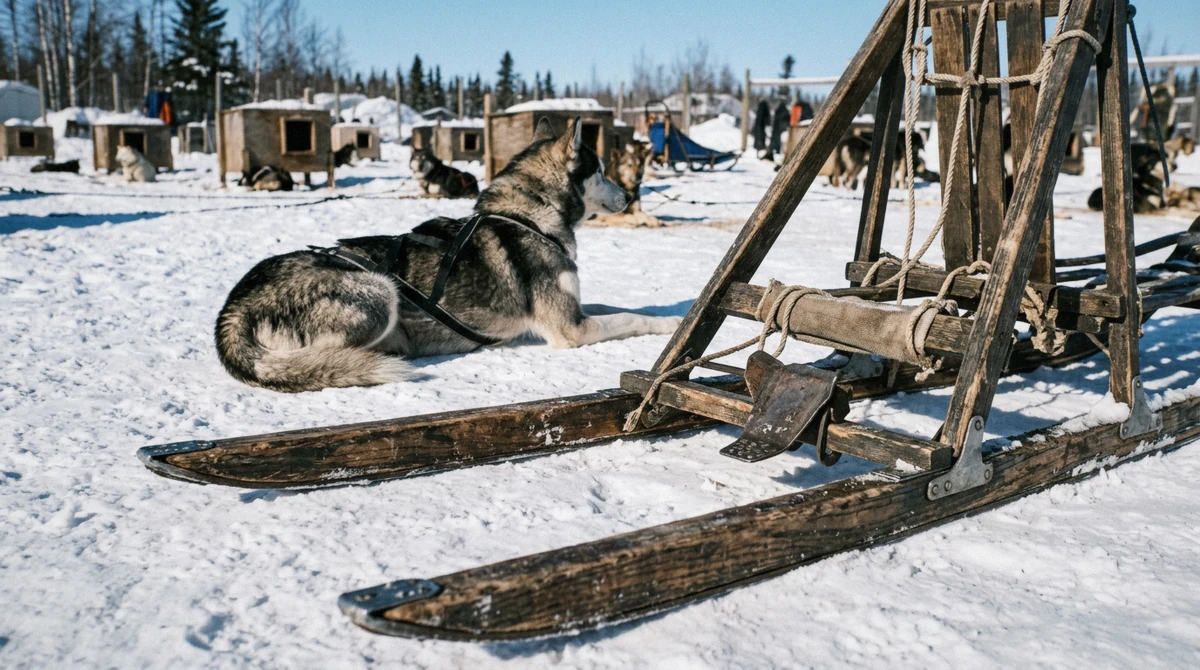
Fairbanks temperatures swing by more than 20°C across the sledding season, from around -23°C (-10°F) in January to freezing point in April, so what's enough in November is not enough in January. Figures are National Weather Service Fairbanks monthly averages.
Monthly averages and what changes
The core layering system doesn't change month to month; what changes is how many layers and how serious the outer shell needs to be. December and January call for the full kit described above, mittens over gloves, and minimal skin exposed. By March and April, a warm jacket over fewer mid layers is often enough for the milder afternoons, though mornings still run well below freezing.
| Month | Average temp | What changes |
|---|---|---|
| November | -16°C / 3°F | Full winter kit; season is just starting, snow cover still building |
| December | -22°C / -8°F | Heaviest layering of the season; minimal skin exposed at any point |
| January | -23°C / -10°F | Coldest month; mittens over gloves, face protection non-negotiable |
| February | -19°C / -2°F | Still full winter kit, slightly less severe than January |
| March | -11°C / 12°F | Warmer afternoons; a lighter outer layer works if mid layers stay warm |
| April | 0°C / 32°F | Late-season tours; layer down but keep waterproof boots for slush |
What You Actually Need to Pack, by Booking
If You booked a run that issues full kit
Base layers, warm socks and your own hat. The North Pole run hands out the rest at the door
If You booked the Yukon Quest trail run
Everything is issued except goggles, and the listing says so. Bring them if you wear glasses
If You booked a hotel-pickup run
You are in your own clothes for the whole thing. A real parka, snow pants and boots rated below your comfort zone, or a rental set
If You are in Fairbanks for one night and packed light
Rent. A full kit runs less than a restaurant dinner and beats flying a parka you will wear twice
If You booked the evening run
Add a layer to whatever you planned. Evening is when the temperature bottoms out, and you sit still through it
Packing Questions for Fairbanks Sled Tours
What do dog sledders wear?
A base layer of wool or synthetic fabric, a fleece or wool mid layer, an insulated windproof parka and bibs on top, mittens over a thin glove liner, a warm hat and a neck gaiter or balaclava, and insulated waterproof boots rated to at least -40°F. Several Fairbanks tours issue the outer layer; check your specific listing in the provided-gear table above.
What shoes to wear for dog sledding?
Insulated, waterproof winter boots rated to -40°F, not hiking boots or city winter boots. A wool or synthetic sock with room for toes to move keeps feet warmer than a thick sock crammed into a snug boot. Boots are part of the kit on tours like the North Pole private run; on tours with no stated gear policy, bring your own or rent a pair in town.
Can I wear jeans dog sledding in Fairbanks?
No. Denim holds moisture and offers no real insulation, and once damp it cools faster than having no layer at all. Wear a synthetic or wool base layer under insulated snow pants or bibs instead.
Do Fairbanks tours provide a parka?
Some do and some don't, and it varies by operator rather than by price. Rod's Alaskan Guide Service and the Yukon Quest Trail run both issue a full outer kit; the hotel-pickup tour issues no gear at all. The table above lists what each tour in the catalogue provides.
Is it worth renting arctic gear in Fairbanks?
Usually, if your tour issues no gear and you don't already own a genuine winter parka and -40°F boots. 6th Avenue Outfitters and Alaska Outdoor Gear both rent full kits for $38 to $50 a day, often cheaper than buying gear you'll wear once and then have to pack home.
How cold does it get on the sled?
January averages about -23°C (-10°F) in Fairbanks, and moving air on a sled adds a wind-chill effect on top of the still-air temperature. Standing still at a photo stop feels colder than the ride itself, which is why hand warmers and a windproof outer layer matter more than any single piece of gear.
Do I need snow pants if my tour provides bibs?
No. bibs cover the same job as snow pants, so wearing both adds bulk without adding warmth. Wear your base layer under whatever bottom layer your tour issues, and bring your own only if your listing's gear policy doesn't mention pants or bibs at all.
The gear question resolves faster than it looks once you know which tour you're on. Confirm what's issued, pack or rent the rest, and the cold stops being the variable that decides how the day goes. For the trail conditions and timing that decide the rest of it, the season guide and the cancellation thresholds cover what's next.
Once the kit is sorted, the choice is which run to take: the Fairbanks dog sled tours are compared on sled time, group size and what each one hands you at the door.